Trading isn’t just about staring at charts and crunching numbers. It’s about reading people. At the end of the day, human emotions — fear, greed, and hope — drive price movements just as much as earnings reports do. We used to rely on traditional tools like the VIX (the market’s “fear index”) to gauge this. The problem? The VIX tells you when the market is panicking, but it doesn’t tell you why.
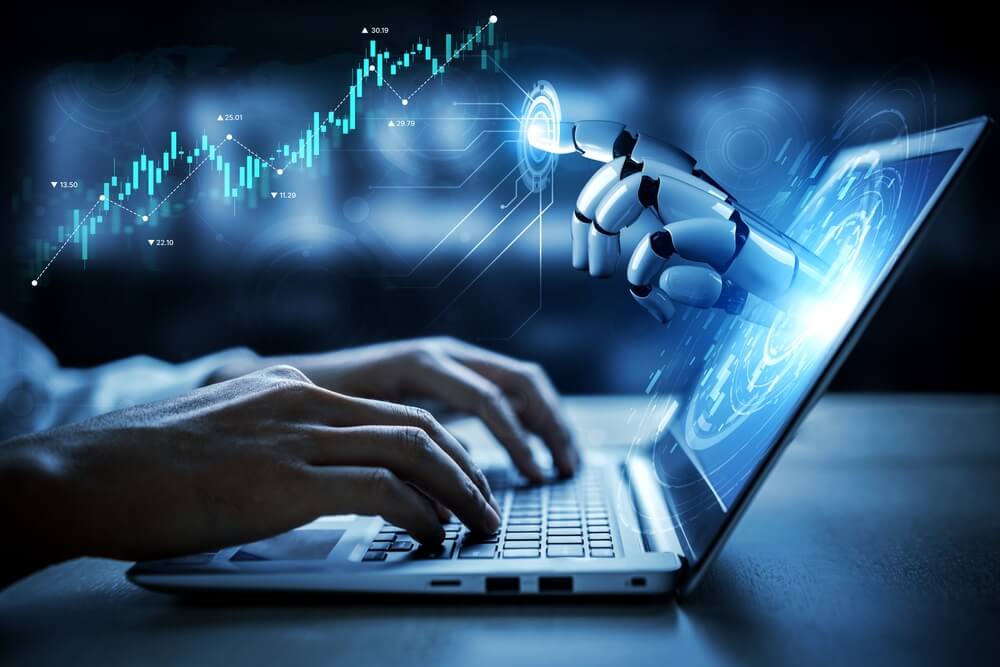
Enter modern Artificial Intelligence. Today’s AI can read millions of words per second. But can it actually turn the chaotic noise of social media and financial news into hard data you can trade with? Let’s find out.
Article content
How AI “Reads” the Room
Modern AI tools (like ChatGPT or Claude) don’t just use “Ctrl+F” to find words like buy or sell. They actually understand context.
For example, AI knows the difference between a panicked trader shouting, “Stocks have hit rock bottom!” (negative) and a strategic trader saying, “We’re looking for a bottom to buy in” (cautiously optimistic). Because it understands tone, AI can grade entire articles on a “sentiment scale”, scoring them from super bearish to super bullish.
Its real superpower, though, is speed. You can’t safely read 2,000 tweets, 50 Reddit threads, and three massive bank reports before your morning coffee. AI can do it in three seconds. It strips away personal bias and hands you a clear, big-picture summary of exactly how the market is feeling.
In practice, this means setting up a consistent prompt where you regularly input news, social media, and reports — letting the AI turn all that noise into a clear sentiment reading.

Where AI Gets Confused
As smart as AI is, it still struggles with trader slang. Sarcasm, irony, and memes can completely trip up the algorithm. If someone posts, “Awesome, down another 10%… just what we needed,” the AI might interpret that as positive sentiment. But as humans, we know that if the stock just crashed 10% that day, the poster is just being incredibly sarcastic.
There’s also the risk of AI “hallucinations.” If an AI doesn’t have enough data, it will sometimes just invent a very logical-sounding lie to answer your question. Blindly trusting an AI without double-checking its facts is a fast track to blowing up your trading account.
How to Actually Use AI (Without Getting Burned)
If you want AI to be a useful sidekick, you have to stop asking vague questions like, “What do people think about gold right now?” You need to be specific. Try these three prompts:
- Filter the noise. Paste links or text from five different news articles and tell the AI: “Summarize the overall market sentiment in these articles into three bullet points.”
- Weigh the odds. Ask the AI: “Based on today’s news headlines, build a table showing the top 3 bullish arguments and top 3 bearish arguments for Bitcoin.”
- Compare past vs. Present: Ask the AI to compare today’s news environment with historical periods of high market volatility. Word of warning: Be extremely careful here. Always double-check historical facts, as AI is notorious for mixing up dates and events.
- Pro tip: play the “judge”. This is a newer, more advanced trick. Ask the AI to act as a “Judge.” First, have it collect the negative opinions on an asset, then the positive ones. Finally, ask it to weigh both sides against each other and deliver a final, unbiased verdict. This limits the algorithm’s bias and gives you a much more balanced view.
At the end of the day, AI gives you context, not signals. How you act on it is what really matters.
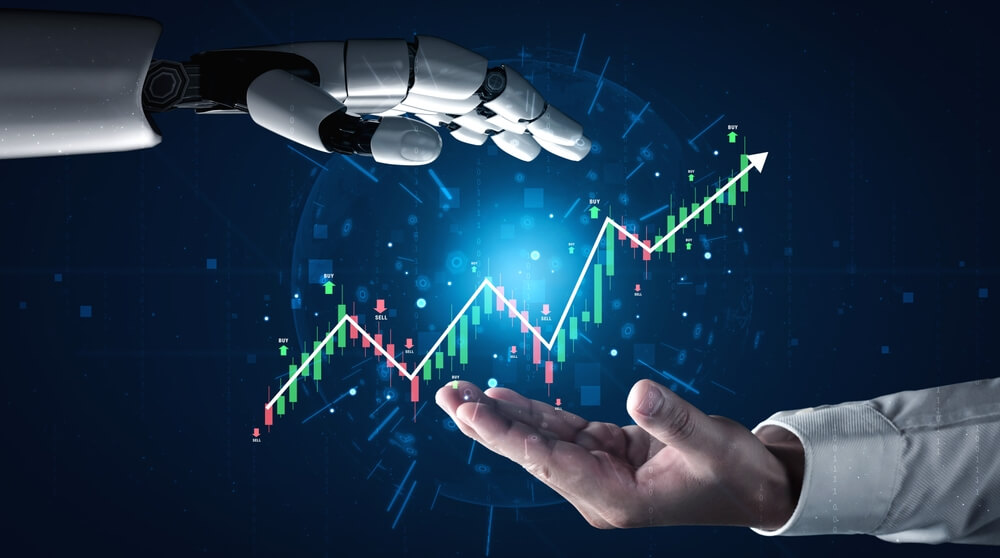
How to Build AI into Your Strategy
Professionals already automate this using AI APIs. Picture a background script scanning headlines every 15 minutes to give you a live “sentiment score.”
This data is perfect for spotting divergence. If an asset’s price is steadily climbing but your AI score plunges (say, below 0.3), that’s a massive red flag. The market is coasting on pure momentum, but the “fuel” of buyer optimism has run out. A drop is likely coming.
However, never trade on AI sentiment alone. Think of it as a wingman for your technical analysis. Its job is to confirm your charts. If you spot a classic reversal pattern and your AI flags that news sentiment just turned negative… your odds of a winning trade just went way up.
The Danger of the “Black Box”
We can’t ignore the “black box” problem: we rarely know why an AI reaches its conclusions. In trading, blindly trusting an invisible algorithm is a major risk.
There’s also the threat of an AI-driven “self-fulfilling prophecy.” If thousands of trading bots read the same bearish headlines and automatically sell at the same time, they could cause the very crash they predicted. In a scenario like that, AI wouldn’t just be analyzing the market — it could actively start shaping it.
The Final Verdict
AI won’t replace human analysts anytime soon, but it is the ultimate assistant. It cuts through the daily noise, freeing you up to focus on actual strategy.
If you want to test the waters, start small. Let AI summarize your daily news feeds. You’ll quickly find that less time spent reading means more time understanding market trends. Ultimately, when news goes stale in minutes, the trader who can turn a wall of text into a smart trade the fastest is the one who wins.