Traders love naming chart formations after familiar shapes, and one of the most eye-catching is the “Dragon” pattern trading setup. While its origins are unclear, it has become a staple for FX traders and technical analysts.
What makes it particularly attractive is its ability to highlight potential market turning points with a recognizable structure. By learning to identify the “Dragon” Forex pattern and applying clear entry and exit rules, traders can turn this complex formation into a practical tool for swing and position trading.
In this article, we’ll explore how to trade the “Dragon” Forex pattern, break down its structure, and provide actionable strategies to improve trading accuracy and confidence.
Article content
What Is the “Dragon” Pattern in Trading?
The “Dragon” chart pattern is a reversal formation that signals a potential change in market momentum. Depending on its orientation, it can indicate either:
- Upside reversal, signaling a shift from a downtrend to an uptrend.
- Downside reversal (Inverted “Dragon”), signaling a shift from an uptrend to a downtrend.
Unlike simpler bearish or bullish reversal Forex patterns like the “Double Bottom” or “Double Top”, the “Dragon” is more complex, involving multiple distinct points that need to align. Because of its complexity, it typically appears on medium or large timeframes (1H, 4H, or daily charts), making it best suited for swing traders or those looking for longer-term trade setups rather than scalpers.
The “Dragon”, being among the best reversal patterns in trading, is valued for its clarity and structure, allowing traders to combine it with technical indicators, such as moving averages, volume analysis, or momentum oscillators, to validate entries and exits.
How to Identify the “Dragon” Pattern
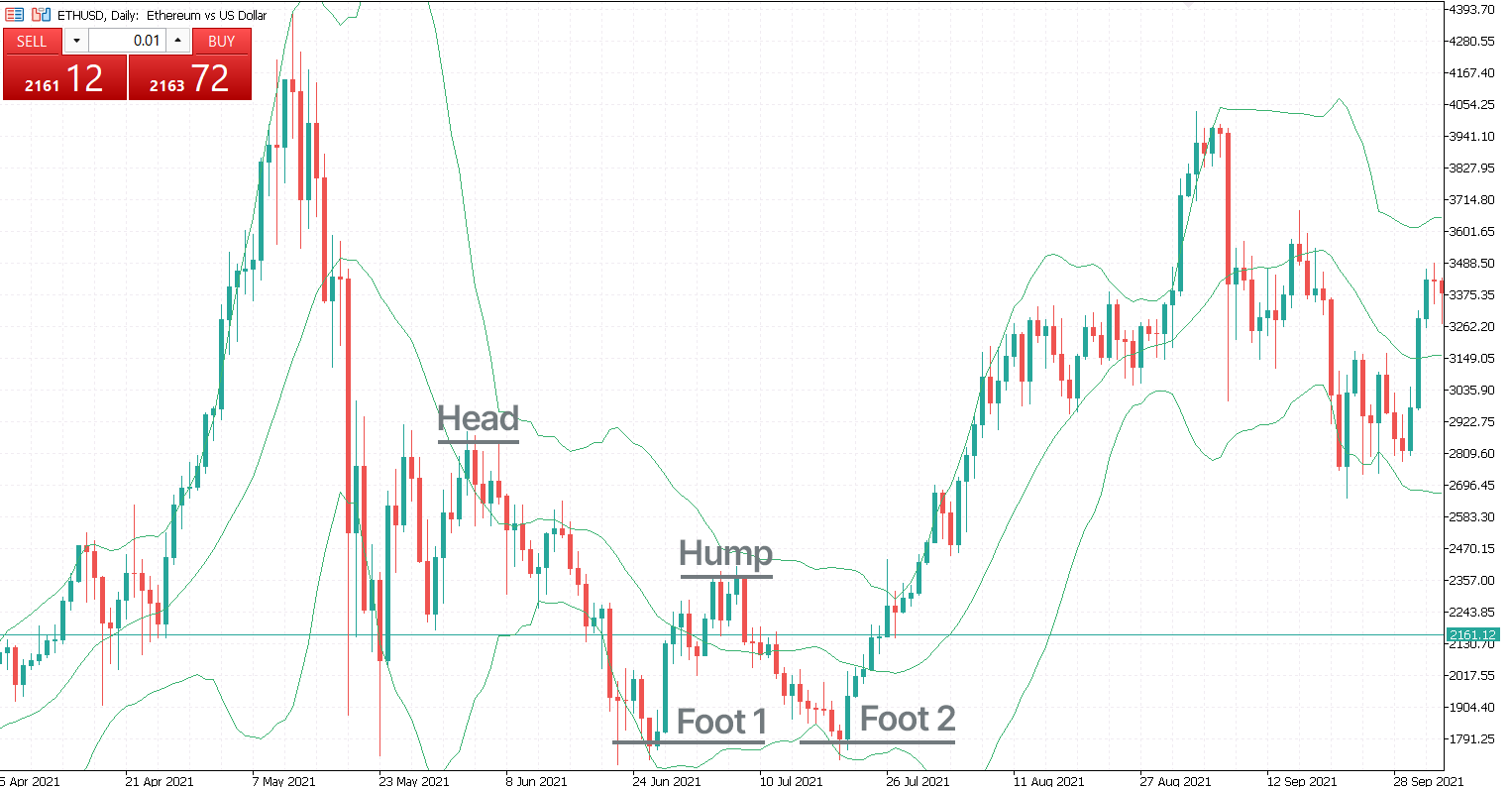
There’s an unwritten rule among traders: the more complex a pattern, the harder it is to profit from it. So, what makes a pattern complex? If the number of points and their length are the main factors, the “Dragon” pattern ranks among the most intricate ones. It consists of five key points: the “head,” two “feet,” the “hump,” and the “tail.” Take a look at this chart:

Like most patterns, the “Dragon” can signal either bullish or bearish movements. The rules for both scenarios are mirrored, so for simplicity, we’ll focus on a bullish example.
Here are some important things to note:
The “Dragon” is a relatively complex pattern that doesn’t appear very often.
You won’t be able to see the entire pattern when you open a trade. Typically, you’ll be entering at the level of the second “foot.”
The second “foot” is often lower than the first. Traders have different views on this: some prefer them at the same level, while others think the first “foot” should be even lower. Experiment to find which approach works best for you.
Another key feature of the “Dragon” is a clear trendline between the “head” and the “hump”:

This trendline is where you should begin your search for the pattern.
“Dragon” Pattern Structure (“Head”, “Feet”, “Hump”)
The “Dragon” pattern consists of five critical elements:
- “Head”. The central peak (bearish) or trough (bullish) that starts the potential reversal formation.
- First “foot”. The initial low (bullish) or high (bearish) following the “head”.
- “Hump”. The mid-point, forming a slanted trendline with the “head”, helps define breakout levels.
- Second “foot”. Slightly lower (bullish) or higher (bearish) than the first “foot”, marking the recommended entry level.
- “Tail”. The final point confirms the trend change after the breakout.
These five points collectively define the “Dragon” pattern strategy. Recognizing them clearly allows traders to structure trades with well-defined entry, stop-loss, and take-profit levels.
How to Trade the “Dragon” Pattern
Now that you know how to spot the “Dragon” on a chart, let’s dive into how to trade it. The trading process is straightforward because it follows a clear set of rules:
- The “Dragon” is a reversal pattern, so you’re trading based on a trend reversal or a significant price rebound.
- Extend the line between the “head” and the “hump.” This creates a slanted resistance line. Enter a buy trade when the price breaks through this line.
- Set your Stop-Loss just below the second “foot.”
There are two common trading approaches to setting a Take-Profit target:
- Conservative style. Place your Take-Profit at the level of the “hump.”
- Aggressive style. Aim for the level of the “head.” However, this may require more patience as it could take longer for the price to reach this target.
Visually, the trading strategy based on the “Dragon” pattern looks as follows:
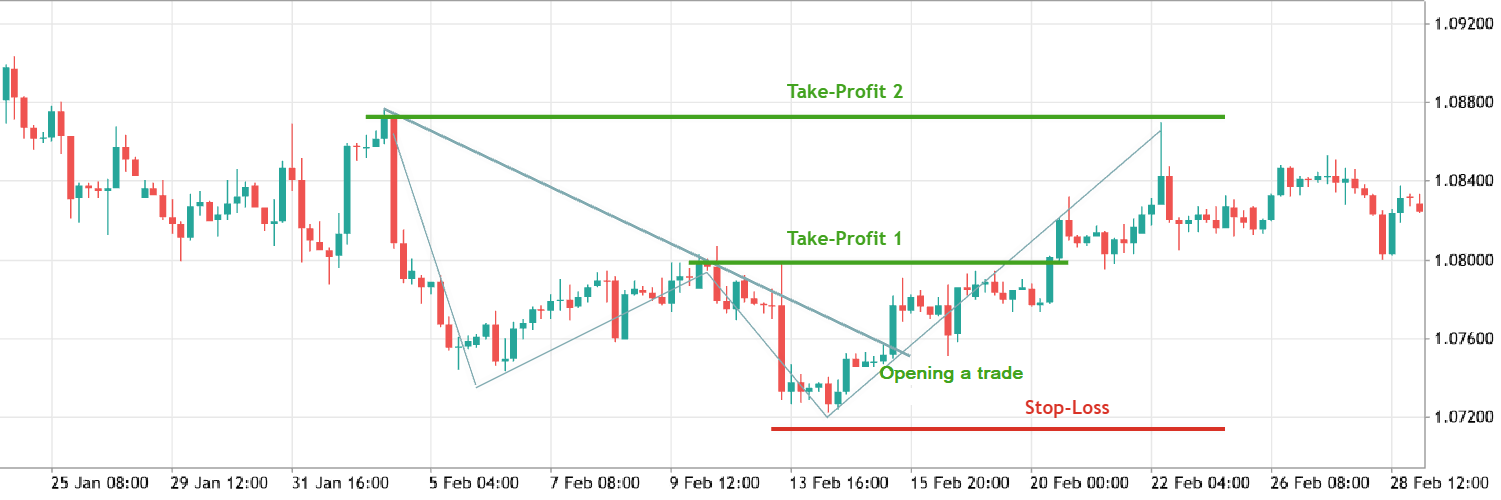
Bullish “Dragon” Pattern Example
Imagine a currency pair in a downtrend: the “Dragon” forms as the price creates the “head”, followed by the first “foot”, “hump”, second “foot”, and “tail”. Once the price breaks the “head-hump” trendline, traders enter long, aiming for the “hump” or “head” as a take-profit target. Combining this with volume and trend confirmation increases the probability of a successful trade.
Bearish (Inverted “Dragon”) Pattern
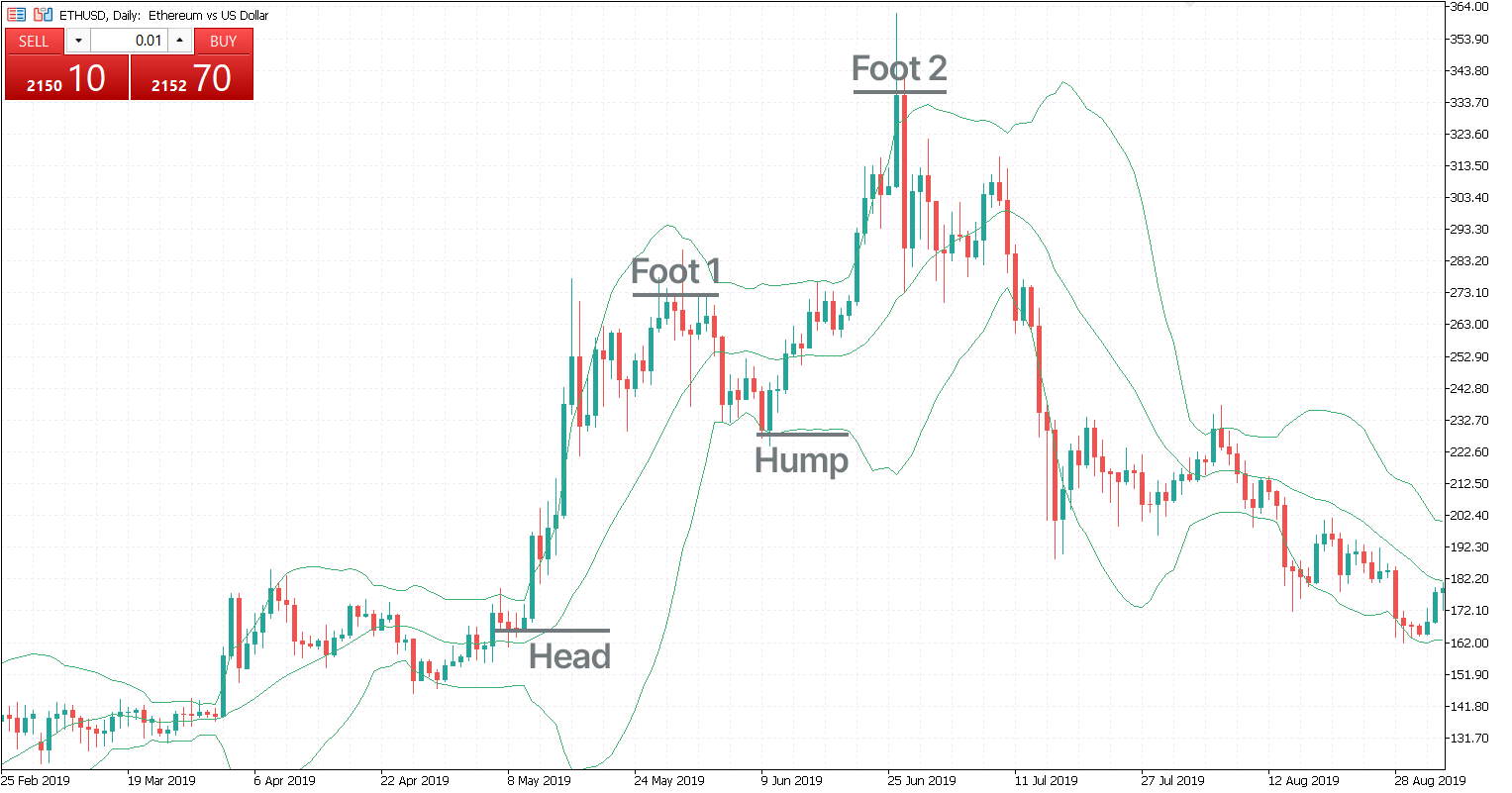
In an uptrend, the inverted “Dragon” signals potential downward movement. Traders look for a price break below the trendline connecting the “head” and “hump” and use the second “foot” as the stop-loss reference.
Breakout Confirmation Strategy
Waiting for a clear breakout is crucial. Entering before the price confirms the break of the “head-hump” line increases the chance of a failed trade. Patience is key, and using candlestick confirmation or a minor retest can further validate the “Dragon” pattern strategy.
Volume and Trend Confirmation
High volume during the breakout indicates strong market participation. Along with analyzing trend direction and strength, this additional confirmation improves the reliability of the “Dragon” pattern.
“Dragon” Pattern vs “Double Bottom”
The “Dragon” may look like the “Double Bottom” formation, but the “head-hump-foot” structure and breakout line timing differentiate it. Using “Dragon” pattern entry and stop loss rules ensures you treat it as a reversal pattern rather than a simple consolidation.
Common Mistakes When Trading the “Dragon”
- Ignoring context. The pattern works best in well-defined trends. Avoid using it in choppy, sideways markets.
- Misidentifying the pattern. Confusing the “Dragon” with continuation formations can lead to losses.
- Entering too early. Wait for a confirmed breakout above or below the trendline.
- Neglecting risk management. Always place stop-loss orders and use appropriate position sizing to avoid large drawdowns.
By combining the “Dragon” pattern trading with trend analysis, volume confirmation, and risk management, traders can build a robust strategy and improve their success rate.