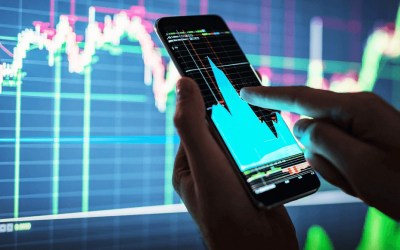
Think of the financial markets like one giant ecosystem — everything is connected. Currencies, stocks, bonds, and commodities all react to the exact same things: inflation, risk, central bank policies, and global expectations. That’s why keeping an eye on the stock market can give you a massive edge in Forex trading.
Intermarket analysis is just a practical way of “looking at the big picture.” It explains why a currency pair might suddenly jump, even when there’s no local news. Often, it comes down to risk appetite. When investors are confidently buying stocks, they are taking on risk. When stock indices drop, that investment money usually moves into safer assets. Here’s how you can use this connection to make smarter trades.
Article content
What Exactly is Intermarket Analysis?
At its core, intermarket analysis means looking at one market to get a clue about what another might do. Take the US dollar, for example. Its value doesn’t just move because of decisions made by the Federal Reserve or US jobs reports. It’s also deeply affected by how US stock indices are performing, the global demand for risk, and the overall health of the world economy. Treating a currency pair like it exists in a vacuum is a classic rookie mistake.
The main goal here isn’t to get a magic “buy” or “sell” signal. It’s to map out the broader setup. It helps you see if the global financial weather supports your trade idea, or if you’re trying to sail into a hurricane.

Stock Indices and Forex
A stock index simply takes the pulse of a huge group of companies. The S&P 500 tracks the massive US players, the Nasdaq 100 follows the tech sector, the DAX covers Germany, the Nikkei 225 reflects Japan, and so on.
When these indices are climbing, investors are usually feeling optimistic. During these “risk-on” periods, money tends to flow into higher-earning and commodity-linked currencies.
But when indices tumble? Investors get scared. They sell off risky assets and seek shelter in “safe-haven” currencies like the US Dollar (USD), the Swiss Franc (CHF), or the Japanese Yen (JPY).
Of course, it’s not an automatic switch. An up day for the S&P 500 doesn’t guarantee an instant spike in a specific currency pair. But indices act like a mood ring for big institutional money. For a Forex trader navigating high volatility, understanding that “mood” is a crucial piece of the puzzle.
The US Dollar and Stock Indices
The US dollar plays by a different set of rules. Because it’s the world’s primary reserve currency and the backbone of global trade, its relationship with the stock market is a bit more complicated.
Sometimes, US stock indices soar while the dollar weakens. This typically happens when investors feel confident — they sell their safe US dollars to chase higher returns in other countries. On the flip side, a booming US stock market can actually strengthen the dollar if that boom is driven by a genuinely strong US economy and expectations of higher interest rates from the Fed. That’s why direction alone isn’t enough. You need to understand why stocks are moving.
If the stock market is rising simply because interest rates are low and money is easy to borrow, the dollar might weaken. But if stocks are pushing higher because the economy is booming, the dollar is likely to stay strong.
Commodity Currencies and the Euro
The Canadian (CAD), Australian (AUD), and New Zealand (NZD) dollars are commonly referred to as “commodity currencies.” They tend to track prices for oil, metals, and agricultural goods, as well as global trade.
When global stock indices are rallying, investors usually feel good about these currencies too — especially if commodity prices are rising at the same time. But if stocks take a nosedive and commodities get cheaper, the AUD, CAD, and NZD often find themselves under pressure.
What about the Euro? It’s closely tied to the health of the European stock market. Keeping an eye on key indices like the German DAX and the French CAC 40 can give you a heads-up on where EUR pairs might go. When European stocks climb because of strong economic reports, the Euro generally gets a healthy boost. But if US markets are looking much stronger than European markets, expect investment capital to flow across the ocean toward the dollar.

How to Put This Into Practice
Don’t worry, you don’t need 15 monitors to do this. Keep it simple. To get a basic read on the market, just keep an eye on a few heavy hitters: the S&P 500, the Nasdaq 100, the DAX, US bond yields, the US Dollar Index (DXY), and key commodities.
The most practical way to use this is to ask yourself: Is the broader market confirming my Forex trade? If EUR/USD is dropping, while the Dollar Index is rising, US bond yields are up, and stock indices are falling — everything is telling the exact same story. Your trade makes sense.
But if you see a currency pair moving completely out of sync with the rest of the financial world? Tread carefully. That move might just be a false breakout.

Limitations to Keep in Mind
One of the most common beginner mistakes is treating these relationships like fixed rules. Markets don’t work that way. The logic shifts depending on central bank policy, inflation trends, geopolitics, and growth expectations. The same news can trigger completely different reactions at different times.
Short-term price moves can also be distorted by technical factors like profit-taking or low liquidity. That’s why intermarket analysis is best used for understanding the big picture, rather than trying to guess what the next 5-minute candlestick will do.
The Bottom Line
Intermarket analysis pulls you out of the Forex bubble and helps you see the actual forces moving your currency pairs. It won’t hand you an exact entry or exit price, but it will show you the market’s current mood, where capital is flowing, and how assets are interacting. The better you understand this context, the easier it becomes to measure the true strength of a trend, dodge fake-outs, and trade with the confidence of a pro.