
If you want to catch strong, fast moves in the market, the “Marubozu” candlestick is exactly what you should be looking for. Unlike tricky price action trading patterns that try to guess when the market is going to turn around, the “Marubozu” is all about pure, uninterrupted momentum. When this candle pops up, it tells you exactly who is in total control, either the buyers or the sellers. Traders love it because it takes the guesswork out of riding a trend.
Article content
- 1 What Is a “Marubozu” Candlestick?
- 2 Types of “Marubozu” (Bullish vs Bearish)
- 3 How to Identify a “Marubozu” Pattern
- 4 How to Trade the “Marubozu” Candle
- 5 Best “Marubozu” Trading Strategies
- 6 Common Mistakes Traders Make
- 7 Bullish “Marubozu” Example
- 8 Bearish “Marubozu” Example
- 9 Entry and Exit Strategy
- 10 Risk Management Tips
- 11 “Marubozu” vs. Other Candlestick Patterns
- 12 Conclusion
What Is a “Marubozu” Candlestick?
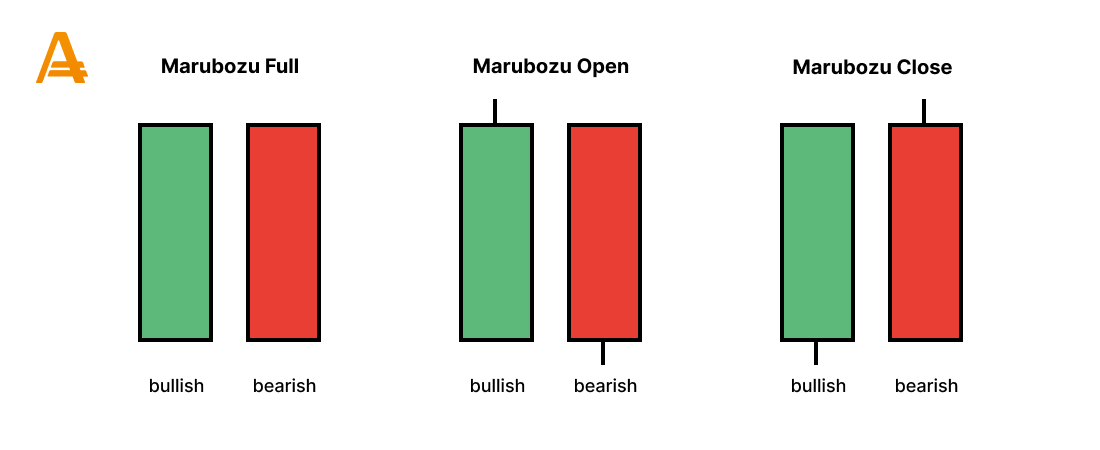
A “Marubozu” candlestick pattern is a single candle with a long body and little to no upper or lower shadows. This means the price moved strongly in one direction during the whole trading period without much pushback.
In simple terms, no wicks mean that either buyers or sellers were in full control from open to close.
Key features:
- A long candle body;
- Little or no shadows;
- A strong move in one direction;
- Clear market momentum.
The “Marubozu” candle’s meaning is straightforward: it shows intense conviction from either buyers or sellers, usually signaling that the current trend is going to continue rather than reverse.
Types of “Marubozu” (Bullish vs Bearish)
There are two primary variations of the “Marubozu” candlestick pattern, each reflecting different market sentiment:
- Bullish “Marubozu”. Opens near the low, closes near the high; buyers in control, trend likely up.
- Bearish “Marubozu”. Opens near the high, closes near the low; sellers in control, trend likely down.
How to Identify a “Marubozu” Pattern
Identifying a valid “Marubozu” candlestick pattern is simple if you focus on its shape and context. In real markets, small wicks are okay, it doesn’t have to be perfect.
To spot the formation, look for:
- A long candle body compared to recent candles;
- Very small or no upper and lower shadows;
- A strong move in one direction;
- Movement that follows the current trend.
How to Trade the “Marubozu” Candle

For traders wondering how to trade the “Marubozu” candlestick, the idea is to follow momentum, not predict the market.
The basic steps are:
- Find a clear “Marubozu” candle.
- Wait for the candle to close.
- Enter a trade in the same direction.
If a bullish “Marubozu” shows up, traders usually buy after the candle closes, expecting the price to keep going up. If a bearish “Marubozu” appears, it often signals a chance to sell.
Best “Marubozu” Trading Strategies
There are several “Marubozu” trading strategies that can help make your trades more accurate and reduce false signals.
Trend Continuation
The most common use. If the market is already trending, a strong “Marubozu” candle in that direction is a signal to follow the trend. Using moving averages can help you stay aligned with the bigger picture.
Volume Confirmation
Volume matters. A big “Marubozu” with high trading volume shows real market strength, making the trend more likely to continue. Low-volume candles are less reliable.
Volatility-Based
Indicators like the Average True Range (ATR) can show if the market has enough momentum to keep moving. Rising volatility often supports continuation trades.
Breakout Strategy
If a “Marubozu” breaks through key support or resistance, it can signal a strong breakout. Traders usually enter after the breakout is confirmed.
Common Mistakes Traders Make
Even though the “Marubozu” candlestick is simple, it’s often used incorrectly. Common mistakes include:
- Trading it in sideways or slow markets;
- Ignoring volume and overall market context;
- Entering trades before the candle closes;
- Skipping stop-loss orders;
- Relying on the pattern alone without confirmation.
Remember: even the best candlestick patterns for trading only work well if you stay disciplined and manage your risk properly.
Bullish “Marubozu” Example


A bullish “Marubozu” usually shows up during an uptrend or at the start of a breakout. The price opens near the low, and buyers push it steadily higher all session. The candle closes near the high with little or no wick, showing strong demand and often signaling that the upward move could continue.
Bearish “Marubozu” Example


A bearish “Marubozu” usually appears in a downtrend or after the price breaks below support. The candle opens near the high, and sellers stay in control all session, pushing the price down to close near the low. It shows strong selling pressure and often means the downtrend could keep going.
Entry and Exit Strategy
Having a clear entry and exit plan is key to consistent trading.
Entry: Wait for the “Marubozu” candle to close and make sure it follows the overall trend. Use supporting indicators if you need extra confirmation.
Exit: Set take-profit levels near important support or resistance. Use trailing stops to ride longer moves, and avoid holding trades against the market’s momentum.
Risk Management Tips
- Only risk a small part of your capital per trade (1–2%);
- Always use stop-loss orders;
- Adjust your position size based on market volatility;
- Don’t overexpose yourself to one market condition.
“Marubozu” vs. Other Candlestick Patterns
Traders often mix up patterns, so it’s important to know the differences and read the market signals correctly. For example, comparing “Marubozu” vs the “Engulfing” pattern:
- “Marubozu” is a single candle that shows strong momentum and usually signals trend continuation.
- “Engulfing” uses two candles and usually points to a possible reversal.
Both are among the best candlestick patterns for trading, but they play different roles in your strategy.
Conclusion
The “Marubozu” candlestick is a strong sign of market momentum and trend strength. Its simple shape and clear meaning make it a useful tool for traders who focus on price action.
By learning the “Marubozu” candle’s meaning, traders can spot higher-probability trading opportunities. But like any tool, it works best with proper analysis, confirmation, and risk management.
Consistent practice, backtesting, and disciplined execution are key to making the “Marubozu” part of a successful trading approach.