In the trading community, there’s a persistent stereotype: long-term trading is a “safe harbor” for people who can’t keep up with scalping or intraday trading. Many assume that holding trades for weeks or months takes less effort because you don’t have to sit in front of a screen for 12 hours a day.
In practice, it’s often the opposite. Long-term trading (or position trading) in the Forex market is one of the toughest psychological challenges. In short-term trading, success largely depends on quick reactions and solid execution. Over the long run, however, up to 90% of success comes down to one skill: the ability to wait. That’s where “encyclopedic” knowledge has to be matched with steel-like endurance.
Article content
The Illusion of Simplicity in Technical Analysis
The first trap traders fall into when switching to D1, W1, or MN timeframes is overestimating the power of technical analysis. Knowledge of reversal patterns, Elliott waves, or Fibonacci levels can suddenly feel not enough.
On higher timeframes, market noise is filtered out, and the chart can look almost “clean.” It may seem like all you need to do is spot a trend and enter the market. But here’s the catch: knowledge can help you find an entry, yet it can’t tell you what happens next. After you enter, you step into a zone of uncertainty where no book can tell you whether a correction will end in two days — or drag on for two months.
Traders with strong theoretical knowledge often get stuck in “analysis paralysis.” Over longer horizons, contradictions are normal: an oscillator may show overbought conditions while a candlestick pattern points to trend continuation. In the end, the winner isn’t the trader who knows the most indicators. It’s the one who can ignore the noise, stick to the original plan, and understand the fundamental forces that create and drive trends.
The “Unrealized Profit” Test
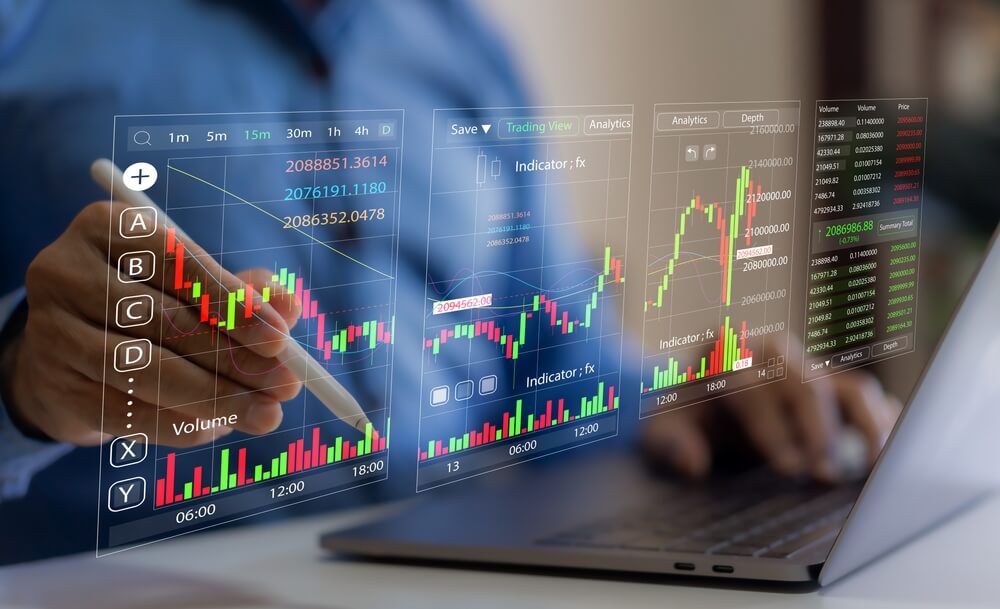
The hardest part of long-term Forex trading is managing your emotions while watching a floating P&L (Profit and Loss).
Imagine this: you open a long position on EUR/USD, and within a week the price moves 150 points in your favor. A short-term trader would likely have locked in profits (probably more than once) and moved on. A long-term trader, however, has to hold the position because the target may be, for example, 500 points.
Then a correction starts. Price returns to your entry level, wiping out all that paper profit. In that moment, your knowledge screams: “You should have closed!” The market is testing your resilience. It takes serious self-control to watch profits drop to zero (or even flip into a small loss) and not hit the close button — knowing this is simply market noise within a broader trend.
Knowledge helps you understand why the pullback happens. But only patience helps you get through it.
Forex Specifics: Swaps and Fundamentals
Unlike the stock market, where an investor can hold shares for years expecting a company’s value to grow, the currency market is cyclical and doesn’t rise forever. And in Forex, time can literally cost you money.
One factor that requires a special kind of patience is the negative swap. If you hold a position against the interest rate differential set by central banks, each day you keep the trade open slightly reduces your deposit.
A smart trader knows how swaps are calculated. But a wise and patient trader understands what swaps do to your mindset. Watching money get deducted from your account day after day while the market barely moves can be frustrating. Long-term Forex trading requires more than waiting — it requires waiting with a clear view of the macroeconomic backdrop. Often, traders have to ignore short-term technical signals in favor of fundamental drivers, such as shifts in Fed or ECB rhetoric. This process can last for quarters and may be accompanied by ongoing swap deductions.

When Inactivity Becomes the Enemy
An active trader gets constant dopamine reinforcement: place a trade, get a result (good or bad). Over time, the brain gets used to action.
In long-term trading, the trader faces an “information vacuum.” You might place only one trade per month. For the remaining 29 days, your job is to do nothing. For someone used to being efficient and busy, that kind of inactivity can feel torturous.
It starts to feel like you’re wasting time. You get an itch to “find another opportunity” — to take a trade on a lower timeframe just to feel the market’s pulse. And it’s exactly at this moment, when self-control slips, that mistakes happen. Those side trades can end up eating into the profits from the main long-term position. Knowledge is powerless here: it’s still there, but boredom pushes you to break your own risk-management rules.
The Relativity of Time and Scale
In Forex, the idea of “long-term” is different from stock investing. Currency pairs rarely move in one direction for years without deep pullbacks.
Patience here isn’t about “buy and forget.” It’s about riding out drawdowns that may be larger than a scalper’s entire deposit. A long-term trader has to be able to sleep well while holding a 300-point drawdown — as long as it fits within their trading system.
Most beginner traders quit long-term trading not because they can’t analyze D1 charts, but because they aren’t ready to see red numbers in the trading platform for weeks while waiting for a global cycle to turn.
Key Takeaways
Long-term Forex trading is not a “holy grail,” and it does not guarantee easy money. It’s a style that trades time and nerves for potentially larger price moves with less market noise.
To succeed, it isn’t enough to study macroeconomics and technical analysis. You also have to develop:
- The ability to stay inactive when the strategy requires it.
- Emotional control when watching profits temporarily melt away.
- The discipline to avoid interfering with the algorithm based on momentary emotions.
The market always pays for the transfer of risk. In long-term trading, you earn a premium not for calculating the market better than others, but for being more patient than the majority.