We all know financial markets offer great money-making potential, but let’s be honest: traditional investing usually requires a big pile of starting capital. If you want to buy a decent chunk of blue-chip stock or take a meaningful position in forex, your everyday savings might not quite cut it.
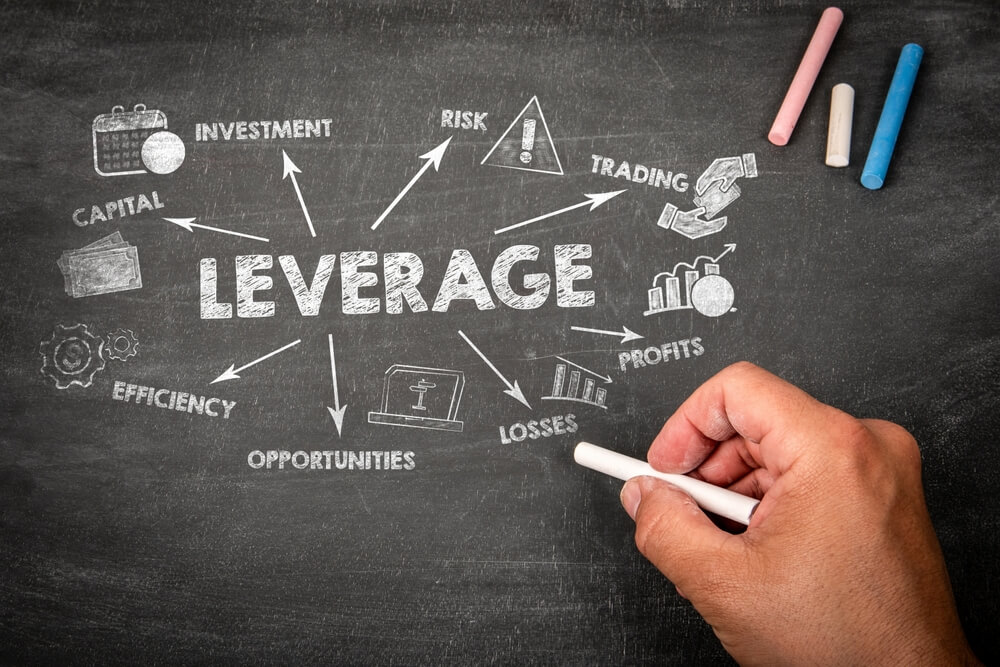
Enter leverage — the most misunderstood tool in trading. Some people think it’s the ultimate cheat code to grow a small account quickly, while others view it as a guaranteed way to go broke. In reality? Leverage isn’t inherently good or bad. It’s just a mathematical multiplier. Its success depends entirely on how well you manage your risk.
Article content
The Mechanics: How Margin Actually Works
First things first: forget everything you know about traditional bank loans. When you use leverage, your broker isn’t handing you a briefcase of cash, checking your credit score, or charging insane late fees that’ll put you in debt for life.
Instead, your broker temporarily “backs” your trade using your own funds as collateral (this is called margin). Think of it as trading with amplified buying power.
Let’s look at a quick example:
- Trading without leverage (1:1). Let’s say you have $1,000. You buy $1,000 worth of a stock. If the price goes up 5%, you make $50. If it drops 5%, you lose $50. Simple enough.
- Trading with 1:10 leverage. Now your broker basically says, “For every $1 you put down, I’ll let you trade $10.” You use your $1,000 as margin to open a $10,000 position. Now, if the market goes up that same 5%, you make $500. That’s a 50% return on your original deposit.
The Catch: Why Leverage Can Be Dangerous
The reason people fear leverage is simple: it’s a double-edged sword. It amplifies your wins, but it also amplifies your losses. When you trade bigger sizes, your account balance is exposed to much higher risk if the market turns against you.
To protect themselves (and you), brokers have two built-in safety nets. These are what usually give leverage a bad reputation, but they are just automated rules:
- Margin Call. This is the broker’s warning system. It basically means “Your trade is losing money, and your collateral is melting away. Add more funds, or we’ll have to start closing things out.”
- Stop Out. If the market keeps going against you and your funds drop to a critical minimum, the broker hits the emergency brake. They will automatically close your trade at the current market price to stop the bleeding. They do this to ensure you don’t end up owing them money you don’t have.
When traders complain about leverage, they’re usually complaining about hitting a Stop Out. But the Stop Out isn’t the villain — poor risk management is.

How to Use Leverage Safely: 3 Golden Rules
Experienced traders don’t treat leverage as a shortcut — they treat it as a precision tool. A helpful way to think about it: leverage is like power steering. It makes things easier, but you still need control.
Here are three simple rules to keep in mind:
- Don’t max out your account. Just because a broker gives you 1:100 leverage doesn’t mean you have to use all of it on one trade. Having access to high leverage is actually a great thing — it means you can put down a tiny amount of margin to open a sensible trade, leaving plenty of free cash in your account to absorb normal market fluctuations.
- Always use a Stop Loss. Trading with leverage without a Stop Loss is like jumping out of a plane and hoping you figure out the parachute on the way down. Always decide exactly how much you are willing to lose (e.g., risking no more than 1–2% of your account) before you enter the trade, and set your Stop Loss there.
- Watch the overnight fees. Brokers charge a tiny fee (called a Swap) for holding a leveraged position open overnight. If you’re day trading, you won’t even notice it. But if you plan to hold a trade for weeks or months, those little fees can eat into your profit, so factor them into your plan.
The Bottom Line
Leverage doesn’t change your strategy — it just magnifies the outcome. If your approach isn’t working, leverage will make losses happen faster. But if you manage risk well and stay disciplined, it can help you make more efficient use of your capital. Used carelessly, it’s dangerous. Used properly, it’s powerful. And the difference comes down to how you manage risk.